15 Best Things to Do in St. Augustine, Florida
St. Augustine was founded in 1565 by the Spanish admiral Pedro Menéndez de Avilés. It is the oldest continuously occupied European-founded city in the continental United States, and it is small. The fort, the main pedestrian street, two Flagler-era hotels, the cathedral and the bayfront all sit inside roughly a square mile. This guide to the best things to do in St. Augustine, FL covers fifteen stops, then practical notes on parking, seasons and where to stay.

Disclosure: This post might contain affiliate links. This means we may earn a small commission (at no extra cost to you) should you choose to sign up for a program or make a purchase using one of our links. You can read our full disclosure here for more details!
The city is on the northeast coast, about 40 miles south of Jacksonville and a two-hour drive from Orlando. Day trips are common. A weekend is better. We already list it among our unique weekend getaways in Florida.
The list starts with the big historic sites, then moves to museums, wildlife and beaches.
Best Things to Do in St. Augustine, Florida
1. Tour the Castillo de San Marcos

The Castillo de San Marcos is the oldest masonry fort in the continental United States. It stands at 1 South Castillo Drive, on Matanzas Bay, at the north end of downtown. Spanish builders started it in 1672. The walls are coquina, a soft stone of compressed shells, and cannonballs tended to sink into it instead of breaking it.
The National Park Service runs the site. First admission is 9:00 a.m., last admission is 5:00 p.m., and visitors must be out by 5:15. The fort is closed only on Thanksgiving and Christmas. After the United States took over in 1821 it was renamed Fort Marion, and it kept that name until 1942. Rangers sometimes fire cannons, so check the day’s schedule.
Visitors can walk the gun deck, look into the storerooms and read about the sieges. Plan one hour, or two with a ranger talk. The gun deck closes during thunderstorms. In July that can mean most afternoons, so go early.
2. Walk St. George Street
St. George Street is pedestrian-only. It begins at the City Gate by the fort and runs south to the Plaza de la Constitución, past gift shops, ice cream counters and small museums in very old buildings.
It is crowded on Saturday afternoons. At 8:30 in the morning it is nearly empty. Side streets such as Hypolita and Cuna are quieter. Aviles Street, which locals call the oldest street in the country, is narrow and brick, with galleries and cafés.
3. Climb the St. Augustine Lighthouse
The lighthouse is at 100 Red Cox Drive on Anastasia Island, a few minutes by car from downtown. It was lit in 1874. The tower is 165 feet tall with 219 steps and landings on the way up. From the gallery you see the Atlantic, the Matanzas River and the old town skyline.
The grounds hold the keeper’s house, a maritime museum and exhibits on shipwrecks and archaeology. Hours run later from spring through September. Children must be tall enough for the climb. The stairs are narrow, so skip it if heights or tight spaces bother you.
4. See Flagler College and the Lightner Museum
Henry Flagler opened the Hotel Ponce de Leon in 1888 for wealthy northerners escaping winter. It is now Flagler College, at 74 King Street. The details are Spanish Renaissance: towers, terra cotta, Tiffany stained glass. The hotel closed in 1967 and the college opened in 1968. Campus tours run through the year.

Across the street at 75 King, the Lightner Museum fills Flagler’s former Hotel Alcazar. Otto Lightner, a Chicago publisher, bought the building in 1946, and the museum opened in 1948. Inside: Victorian collections of glass, music boxes, antiques and natural history specimens, arranged around the space that once held the hotel’s indoor pool. Allow two hours. Upper floors close a little before the ground floor.
5. Step Inside Villa Zorayda
Villa Zorayda, at 83 King Street, was built in the 1880s by the Boston businessman Franklin Smith. The style is Moorish Revival, modeled on the Alhambra in Spain. The material is poured concrete mixed with coquina, which was unusual then.

It is a museum now, with period rooms and antiques Smith collected abroad. Guided tours explain the house. Under an hour.
6. Visit the Cathedral Basilica
The Cathedral Basilica of St. Augustine stands on the north side of the Plaza de la Constitución. The parish traces back to the first Spanish settlers. The present building mostly dates to the 1790s, with rebuilding after a fire in 1887. Inside are murals and stained glass.
7. Check Out the Fountain of Youth Archaeological Park
The park is at 11 Magnolia Avenue. According to legend, Juan Ponce de León found a spring of eternal youth near here in 1513. Historians do not credit the story. The archaeology is real, though. Excavations on the grounds found traces of early Spanish colonists and of a Timucua village that predates the city.
Visitors can taste the spring water, watch demonstrations and walk through a replica Timucua settlement.
8. Pay a Visit to Mission Nombre de Dios
Menéndez came ashore here in 1565, and the first Catholic Mass of the new colony was held on the spot. A stainless steel cross roughly 208 feet tall marks it. The mission is at 27 Ocean Avenue, north of the old town. The grounds hold the small Shrine of Our Lady of La Leche, a chapel and a quiet path.
Dress modestly for the chapel. It is an active place of worship.
9. Meet the Reptiles at the St. Augustine Alligator Farm
The Alligator Farm Zoological Park, at 999 Anastasia Boulevard, has operated since the 1890s. It is among the oldest attractions in Florida. It claims every species of crocodilian in the world. Elevated boardwalks run over a rookery where wading birds nest in spring, and a zip line course crosses above the animal exhibits.
For more wildlife, see our guide to where to see flamingos in Florida.
10. Cross the Bridge of Lions
The Bridge of Lions opened in 1927 and carries traffic over Matanzas Bay to Anastasia Island. Two marble lions guard the downtown end. At sunset, the seawall along Avenida Menéndez frames the sailboats and the Castillo together. Restaurants along the bayfront serve mostly shrimp and local seafood, many with outdoor tables.
11. Go to the Beach at Anastasia State Park
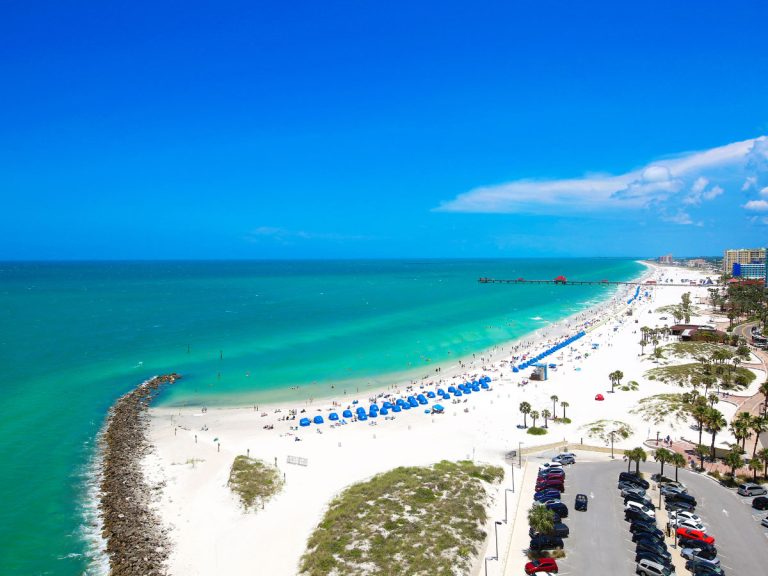
Anastasia State Park has about four miles of Atlantic beach, plus dunes, a tidal lagoon and a campground, minutes from downtown. The sand is tan rather than Gulf-coast white. Waves are mild enough for swimming. The park rents kayaks and paddleboards.
Vilano Beach north of the old town and St. Augustine Beach to the south have more shops and restaurants near the sand. For Gulf sand, see our list of the best islands in Florida.
12. Take the Free Ferry to Fort Matanzas
Fort Matanzas National Monument is a small watchtower the Spanish built in the 1740s to guard the southern approach. It is on A1A, about 15 miles south of the old city. A National Park Service ferry crosses the Matanzas River to it at no charge.
Boarding passes are required for every rider, children and babies included. They are handed out at the visitor center, first come, first served. The ferry does not run every day, and the schedule has changed in recent years. Check the park’s website before driving out. The grounds are open 9:00 a.m. to 5:30 p.m.
13. Peek Into Castle Warden
Castle Warden is a Moorish-style mansion from the 1880s. It now houses a Ripley’s Believe It or Not! museum. The building is the main attraction.

Other small museums in the old town include the Oldest House Museum, parts of which date to the early 1700s, and the Old Jail, with costumed guides. Castle Warden also appears in our roundup of castles in Florida.
14. Tour the St. Augustine Distillery
The distillery is at 112 Riberia Street, in a restored ice plant from the early 1900s. It makes gin, bourbon, rum and vodka. The tour walks through production and ends with a tasting. Tours fill up on weekends, so check times first. It is a good rainy-day stop and walkable from the old town.
15. See the Nights of Lights
Millions of white lights outline the Plaza, the Lightner grounds, Flagler College and the bayfront. The season usually runs from just before Thanksgiving week and continues through the middle of January, with a lighting ceremony on opening night at Parque de Menendez.

Walking is the most flexible way to see the lights. Trolley and boat tours are the alternatives. Weekend evenings are jammed, so choose a weeknight and park outside the core. For other holiday towns, see our guide to Christmas towns in Florida.
Also Worth Your Time
Oldest House Museum
The González-Alvarez House, at 14 St. Francis Street, is known as the Oldest House. Parts of it date to about 1723, rebuilt after the 1702 attack that burned much of the town. It has been occupied by Spanish, British and American families. Tours go through the rooms and the garden.
Spanish Military Hospital Museum
On Aviles Street, a re-created 1790s hospital shows period medicine: bleeding bowls, saws and herbs. It is short, odd and a little gruesome. Plan 30 minutes.
Local Food
Two things belong only to St. Augustine. Datil pepper is a small, sweet-hot pepper that has grown in the area since the 1700s, and it turns up in hot sauces and marinades. Minorcan clam chowder is a spicy tomato-based chowder tied to the Minorcan settlers who arrived in 1768. Order either at a bayfront restaurant.
A Short History
The Spanish founded the town in 1565. Sir Francis Drake’s English raiders burned it in 1586. Carolina forces under James Moore besieged it in 1702 and burned the town, but could not take the stone fort, where residents had taken shelter. Spain ceded Florida to Britain in 1763, got it back in 1783 and passed it to the United States in 1821.
The modern tourist city began in the 1880s. Henry Flagler built the Hotel Ponce de Leon in 1888 and extended his railroad south to carry guests, and the town became a winter resort for wealthy northerners. Many of the buildings you see today date from that period.
Practical Tips for Visiting St. Augustine
Jacksonville International Airport is the closest big airport, roughly an hour by car. Orlando is about two hours. Street parking downtown is scarce and metered. Most day visitors use the Historic Downtown Parking Facility by the visitor center, near the Castillo.
The National Park Service calls fall and spring the most temperate seasons, with highs usually in the 70s and low 80s. The fort sees the fewest visitors from mid-September through mid-November and the most on holidays, school breaks and weekends. A busy Saturday there draws about 3,500 people.
Summer afternoons bring thunderstorms. Do the fort and lighthouse before lunch and museums after.
No car? You can book a rental through Discover Cars, or ride the trolleys that loop through the historic district.
For a bed, Casa Monica Resort and Spa opened in 1888 on the corner of the Plaza, built by Franklin Smith and bought by Flagler within months. It reopened as a hotel in 1999 after decades in other uses. Small bed and breakfasts line the side streets. Hotels on Anastasia Island and at Vilano Beach cost a little less and sit closer to the sand.
A One-Day Plan
Castillo at 9:00 a.m. St. George Street and the Plaza by late morning. Lunch near the bayfront. Early afternoon at the lighthouse. Late afternoon at Anastasia State Park or Vilano Beach. Dinner back downtown. Walk across the Bridge of Lions at sunset if the weather cooperates.
A second day can add the Lightner Museum, Villa Zorayda and the distillery. A third reaches Fort Matanzas.
Driving from South Florida takes most of a day. Closer options are in our list of weekend trips from Miami and our guide to inexpensive weekend getaways in Florida.
What Costs Nothing
Walking the old town, sitting in the Plaza, the Mission Nombre de Dios grounds, the bayfront seawall and the Fort Matanzas ferry are free. Nights of Lights is free on foot. Tours by boat or trolley cost extra.
Where the Name Comes From
Menéndez sighted land on August 28, 1565, the feast day of Saint Augustine of Hippo, and came ashore on September 8. The city took the saint’s name. The mission at the landing site is called Nombre de Dios, “Name of God.”